One of your lines makes a drug.
The warning letter is addressed to the whole company. BatchGlow is batch manufacturing software for contract manufacturers running cosmetics and OTC monograph products side by side, from the customer’s order to the released lot.
Watch: a dose can’t be recorded until the weight is right (56 s)
Pre-release, and taking three sites. You would work directly with the person writing the code. What does “G.L.O.W.” mean?
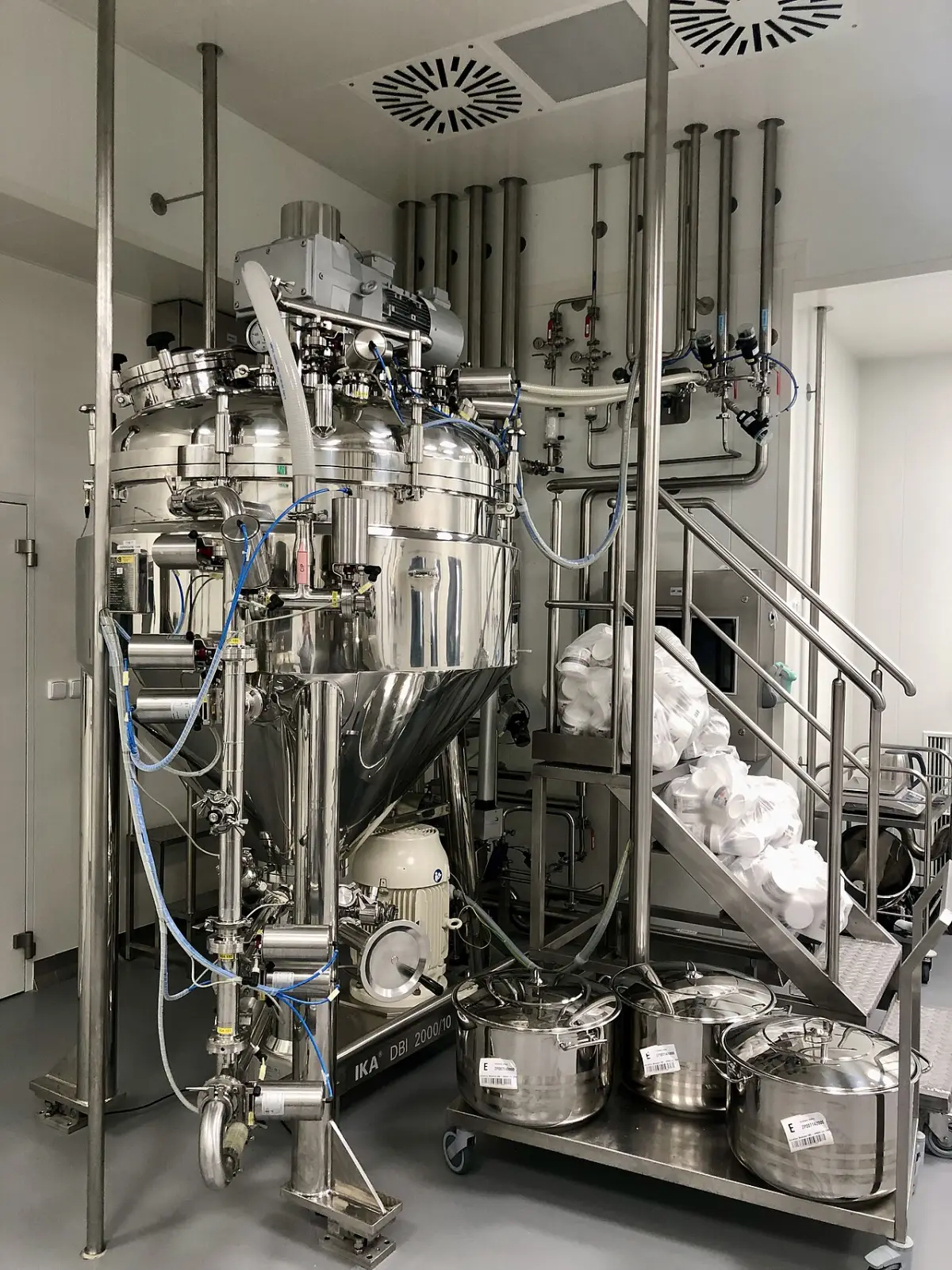
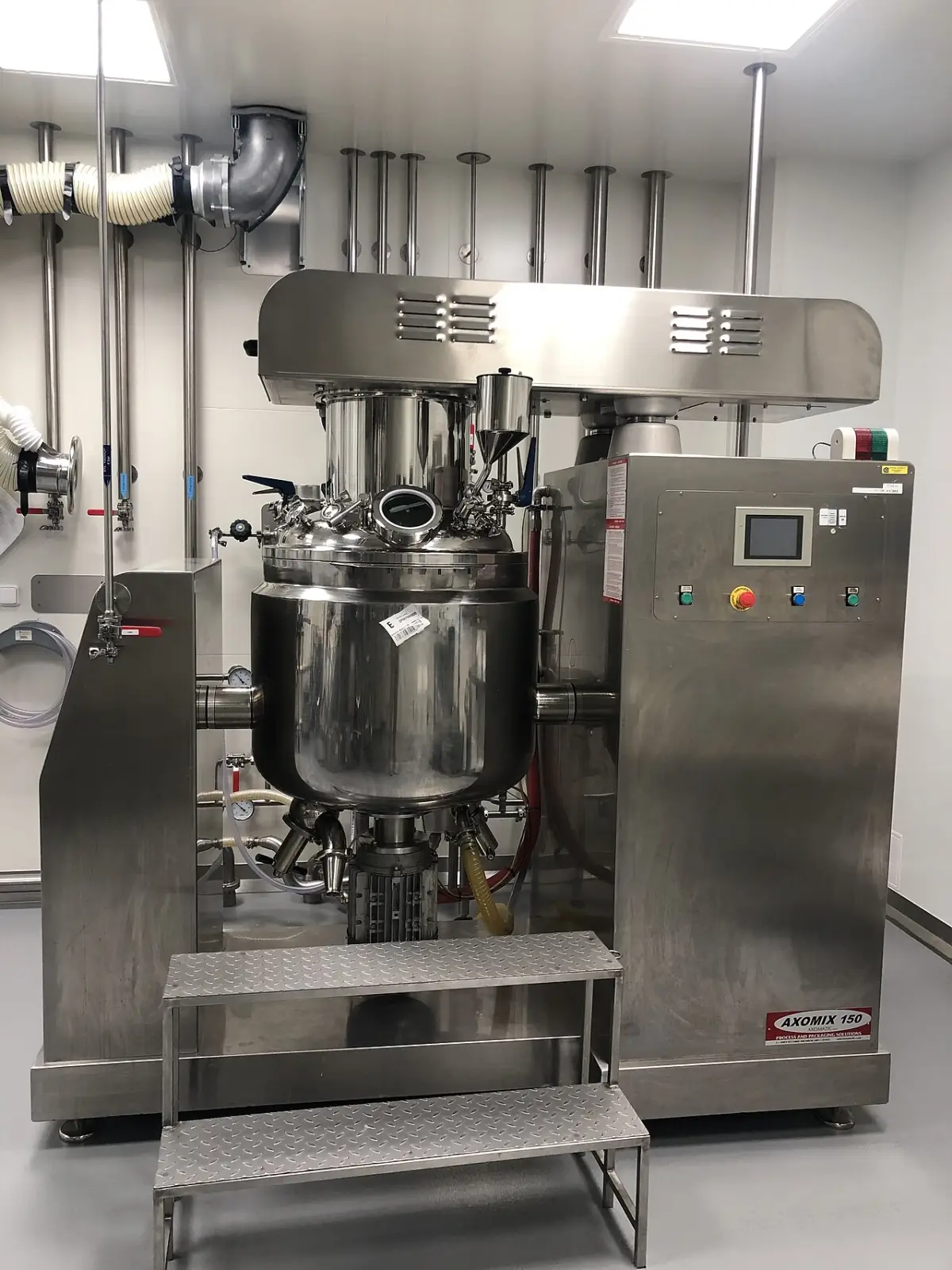
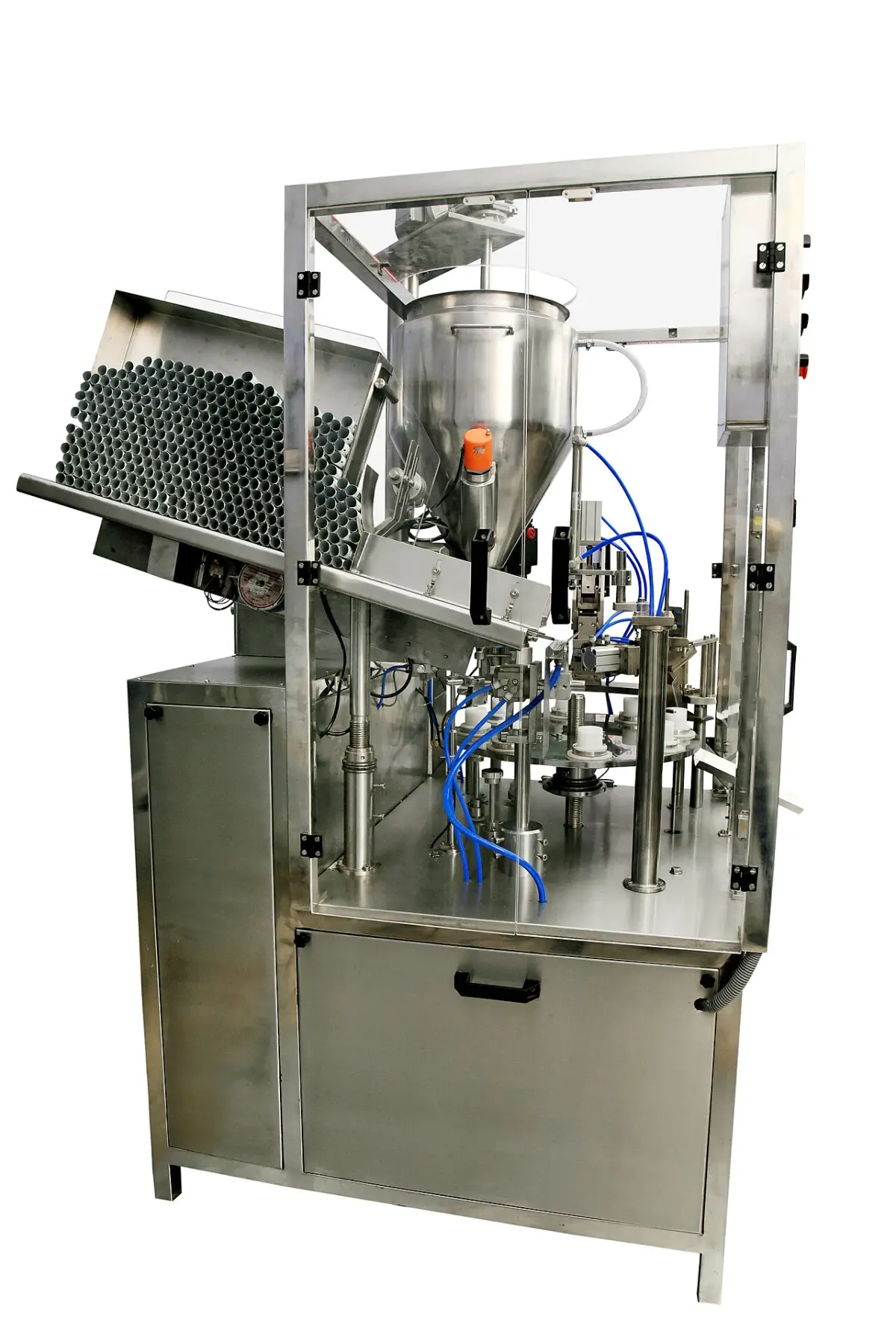
FDA is citing 211.
Everyone is selling MoCRA, and its cosmetic GMP rule under §606 has still not been issued, not even as a proposed rule. Meanwhile these five plants (three with “cosmetics” in the name on the door) were cited under drug cGMP, because FDA classes what comes off their lines as drug products: the regime follows the product, not the company's self-description.
Each of these findings comes down to a record: whether it exists, with a name and a timestamp on it, and whether it holds up. Do not take my word for it: read the Technichem letter. FDA notes in it that some of the firm's products may be regulated as cosmetics, and cites the firm under drug cGMP anyway.
Two regimes, one system
When your sunscreen line and your face-cream line share a floor, one of them is a drug, made under drug cGMP, 21 CFR 211. BatchGlow is built for exactly that split: drug cGMP where the product is a drug, and on the cosmetic line what cosmetic law requires, with everything else set the way the plant runs it.
What is on the line?
OTC monograph product · drug cGMP
Full 211 gating
The active’s weight set from each lot’s assay before it is weighed, a second person checking each weighing and addition, the plant’s own identity test on every lot, release on a passing assay. Adding active to a batch already made is reprocessing, and goes through QA’s signed path.
Cosmetic product · cosmetic law
The law, then your settings
Cosmetic law stops the work, and so do a few BatchGlow rules: quarantine at receipt, lot traceability, two owners’ material never mixed. Clean hold, line clearance and release discipline are plant settings marked “not required by law”, most on by default, any of them yours to switch off. Stamping “211” across cosmetic processes as if it were law is both legally wrong and operationally expensive.
The whole system is organized around this split: a formula becomes OTC by itself the moment one of its ingredients is an OTC drug component.
BatchG.L.O.W.
Guided Lifecycle & Operations Workflow
A batch has one continuous life, from the drum that arrives at your dock to the retain sample still on a shelf long after the last unit of that lot has expired, and the gaps between systems are exactly where the records go missing.
How a batch runs, stage by stage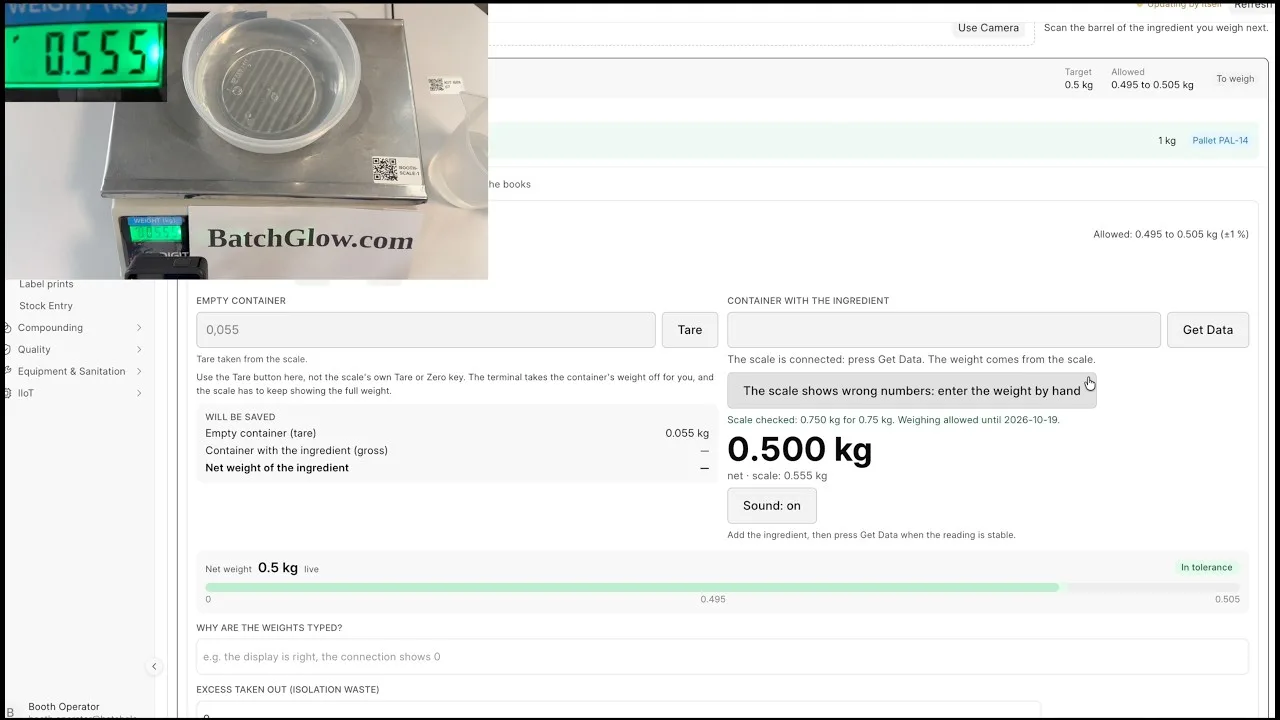
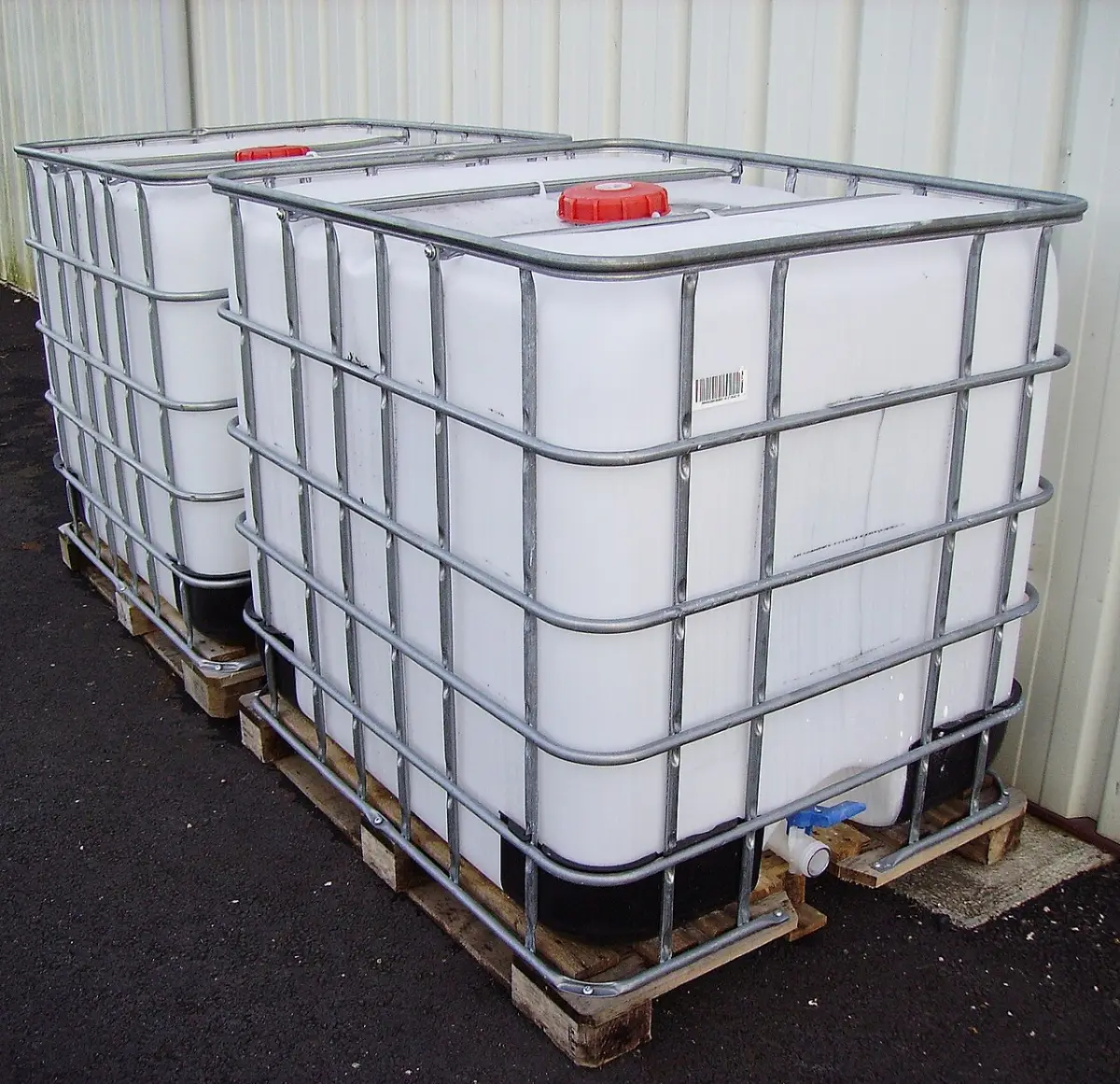
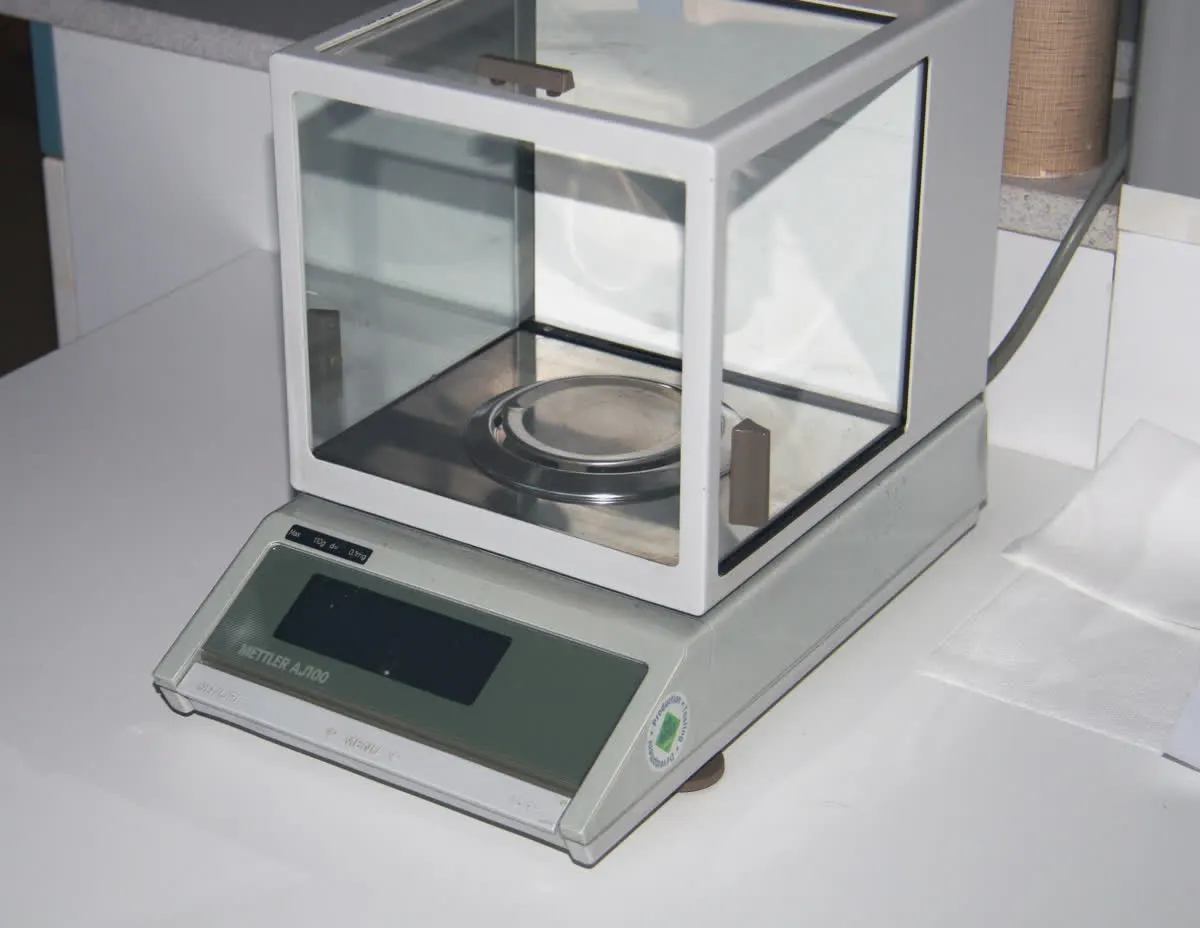
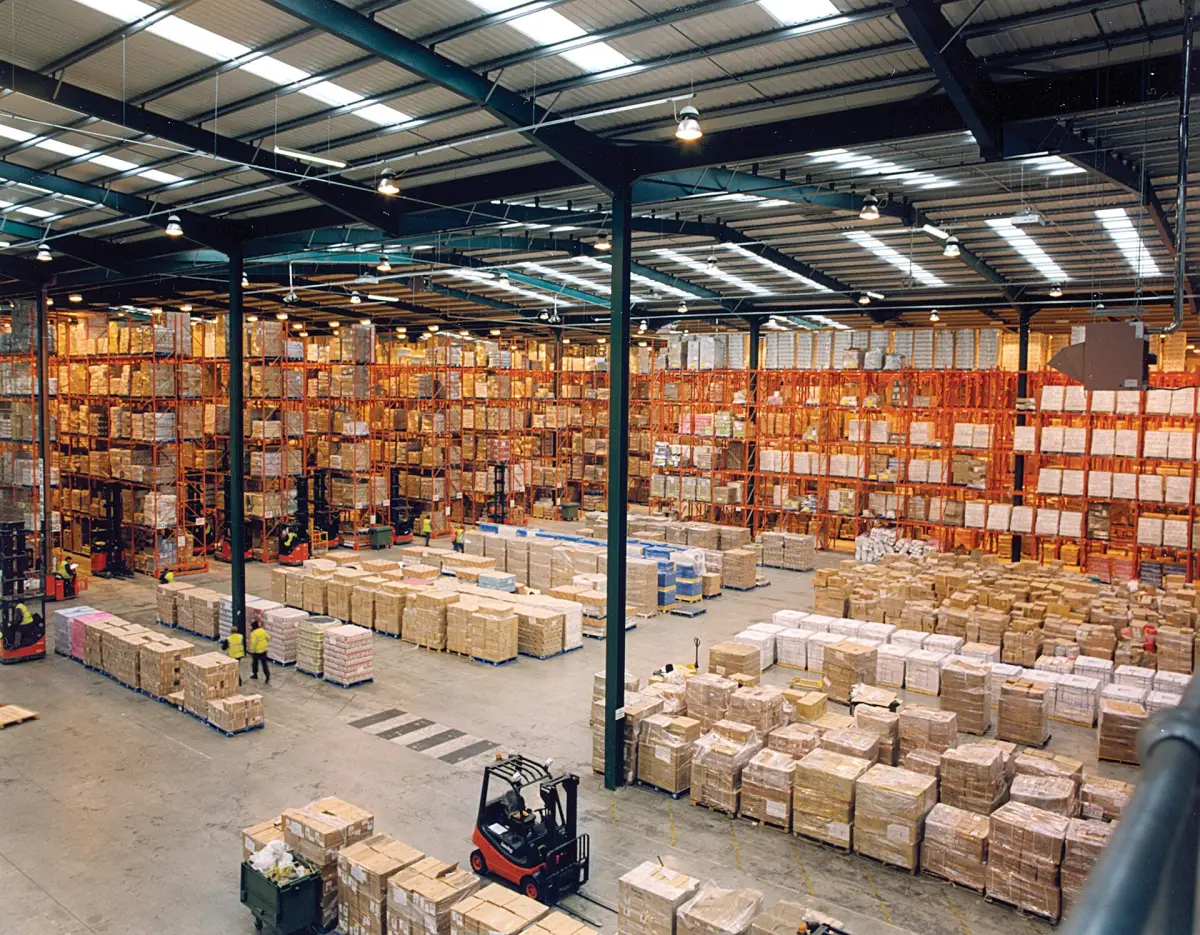
The whole plant
One system from the customer’s order to the released lot: the formula, the schedule, the purchase order, the dock, the lab, the warehouse, the kettle, the line, the equipment and its cleaning, the devices on the floor and the quality system, each part built to the rule that governs it, and every bill, invoice and payment sent to QuickBooks for your accountant.
What it enforces
Six rules the system holds, and why.
What a pilot involves
BatchGlow is pre-release, and I am looking for three US contract manufacturers to build it against real production, not a demo dataset. Preference goes to plants running both cosmetics and OTC monograph products.
What it does not have, and the established systems do: years of production history, a certification, an audit trail of other people's inspections. If that is what your situation needs, choose one of them: how the options compare.
What you get
- Your own instance, hosted and run by me, configured to your procedures. Nothing to install at the plant but the BatchGlow Connector, on the shop-floor PC your scales and instruments plug into. Your people open a browser.
- Your formulas, raw materials, suppliers and specifications loaded for you from your spreadsheets and exports. Your QA reviews them, and each formula and supplier is signed before it goes live. You won't need outside programmers.
- A direct line to the person writing the code, and a say in what gets built next.
- No charge during the pilot. At its end we agree your price per production site, and that price stays fixed for three years from the day you subscribe.
What I need from you
- About two hours of QA time a week. That is the cost of the pilot: a pilot nobody uses teaches neither of us anything.
- Real batches in the system, running alongside your current process until you trust it.
- Your honest reading of your own line clearance and receiving procedures, so I build to what your floor actually does.
- Permission to describe what we did together, once you are happy with it.
How the pilot runs: a look at three sample sheets of your data and your procedures; your data loaded as drafts for your QA to review, with each formula and supplier signed; real batches run alongside your current process; then you decide to subscribe, extend or stop.
Terms are set in a written pilot agreement, signed before any real GMP record goes into the system.
Pricing after the pilot
Per production site, with unlimited users and unlimited shop-floor terminals. Charging per seat is what pushes plants onto shared logins in the first place, and a shared login makes every electronic signature in the building worthless. Tiers scale with the number of packaging lines, never with headcount. Part 11 signatures and lot traceability sit in the base tier and will never move behind an upgrade. The numbers are set with the first three sites at the end of their pilots, and the price you agree stays fixed for three years.
Eleven years as one plant's ERP developer

Where it comes from
I am a contract developer. For eleven years I worked, remotely, as the developer of the production ERP at Tropical Labs in Tampa, a contract manufacturer making cosmetics, OTC products and supplements in one building. That is the exact plant this product is for. I wrote the software that plant ran on, to requirements from the QA and production people who had to live with whatever I shipped. BatchGlow is not that system. Theirs stays theirs. This one is written from scratch and shares no code with it.
Questions to ask
What happens to my records if you stop working on this?
Is BatchGlow a validated system?
We only make cosmetics, no OTC. Is this for us?
Do we pay per user or per device?
Talk to me about a pilot
Tell me about your plant. I read every message myself and reply within two business days, including when the answer is that BatchGlow is not the right fit for you yet.
Your formulations, customers and production details stay confidential and are never shared. I am happy to sign your NDA before we talk specifics.